


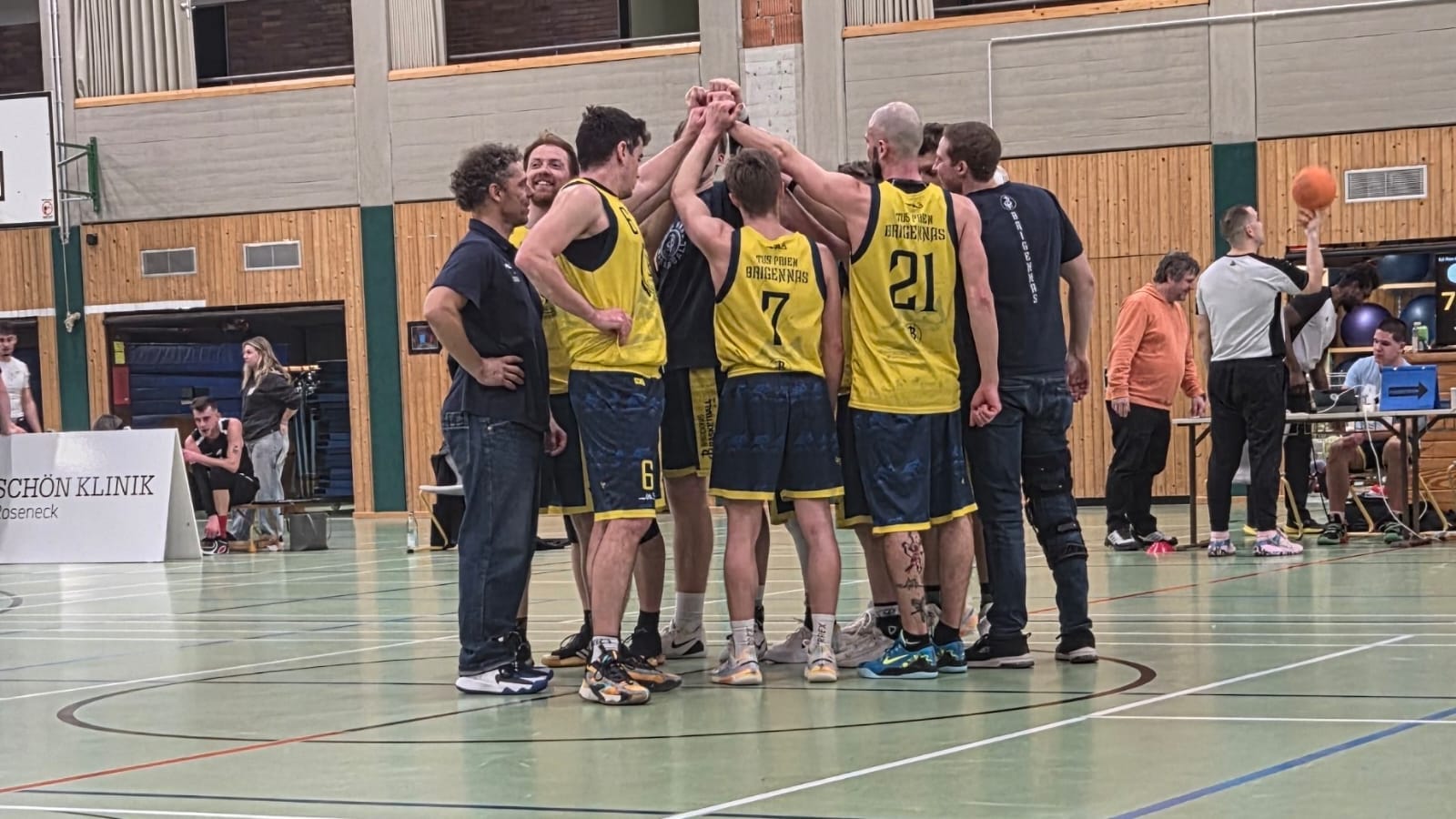
My team just got promoted. Recreational league, nothing glamorous. Nobody’s getting scouted. The post-game drinks cost more than our kit. But the question that’s been rattling around my head since we clinched it is the same one that keeps me up when I think about product teams, youth academies, and championship dynasties: what actually makes some teams better than others?
Not just once. Consistently.
It’s a question that sounds simple until you try to answer it. Talent? Sure, but plenty of stacked rosters underperform. Leadership? Depends on what kind.
Culture? The most overused word in business after “alignment.” Money? Ulm’s youth academy outproduces clubs with ten times the budget. My recreational team doesn’t even have a budget.
So when I stumbled on Ron Friedman’s piece in Harvard Business Review — “How to Build a Superteam That Keeps Getting Better” — I read it the way I read anything that touches a question I actually care about: fast the first time, slow the second, skeptical the third.
Here’s what stuck. And where I’d push back.
The research is solid. The framing is interesting.
Friedman’s team surveyed more than 6,000 knowledge workers and identified what separates “superteams” from the rest. The headline finding: the best teams aren’t the ones with the most talent or the best strategy. They’re the ones that learn faster. They build cultures of continuous improvement — not as a poster on the wall, but as a daily habit.
Three strengths stood out: managing time, energy, and attention better. Actively making each other better. And — the one that caught my attention — continuously building new skills and improving over time. But I was also suprised that processes, the poster child of Kaizen, were suprisingly absent from the list.
They open with the OKC Thunder. 58 losses in 2022. Then 40 wins, 57 wins, 68 wins — each season blowing past Vegas projections by double digits. Champions by 2025 with the youngest roster ever to earn a number one seed. The article argues it wasn’t a lucky draft or one superstar. It was an organizational habit: the entire system was designed to improve every year, regardless of starting position.
And here’s the part that gets me: the Thunder did this twice. After relocating from Seattle in 2008, they rebuilt and reached the NBA Finals within four seasons. Then, when star players left and spending rules forced another rebuild, they did it again. Sam Presti, the GM, traded away All-Stars in their prime for draft picks before that strategy was fashionable. He scrapped the traditional lineup format — one center, two forwards, two guards — and experimented with lineups featuring two centers, no center, three point guards. “A big part of our success,” Presti has said, “has been our tolerance for the messiness and even the regression of pursuing progress and growth.”
That line alone is worth the read.
I buy it. Mostly.
Where I agree: “What are you stuck on?” is worth more than any standup format
Of the seven habits Friedman identifies, the one that struck a chord with me was the simplest: superteam leaders routinely ask “What are you stuck on?” The data backs it up — superteam leaders are 43% more likely than average-team leaders to steer discussions toward problems that need solving.
That’s it. One question. No framework. No retrospective template. No Miro board.
I’ve led product teams for years. I’ve run standups in every format imaginable — async, sync, walking, written, fifteen minutes, five minutes, the ones where you hold a ball. The dirty secret is that most status meetings are theater. Everyone reports progress. Real problems stay underground until they’re expensive.
“What are you stuck on?” does something different. It normalizes struggle. It surfaces friction early. And it shifts the social contract from “look competent” to “let’s actually fix things.”
I’ve started using it in our recreational league huddles too, by the way. Turns out even amateur athletes hide their weaknesses unless you ask directly. The point guard who can’t read pick and roll coverages will continue to turn overt the ball until someone creates the space to say I need help with this.
Where I agree but want more: experimentation without consequence is just theatre
Friedman argues superteams “never stop testing.” They run experiments even when results are already good. The numbers: superteams reported experimenting nearly 50% more often than average teams. They’re 30% more open to trying new things and 39% more comfortable taking risks. Their leaders are three times more likely to reward intelligent risks, even when outcomes fall short. Reid Hoffman dared his LinkedIn team to fail 15% of the time. Reed Hastings got nervous when too many Netflix shows were hits — not enough risk-taking. Fine, I’m sold on the premise.
But here’s the part the article doesn’t really address: experimentation only works if there are actual consequences to the learning. I’ve seen plenty of teams that run experiments. A/B tests. Spike tickets. “Discovery sprints.” The experiment happens. The learnings get written up. And then nothing changes because the roadmap was already committed six weeks ago or the second iteration gets delayed to the point where it never happens.
The habit isn’t experimentation. The habit is acting on what you learn, even when it’s inconvenient. That’s the part that requires courage, not process.
My recreational league team learned this the hard way. We weren’t exactly in game shape at the beginning of the season and the intensity during practice did not prepare us to handle the pressure we would face in competition gracefully. We lost three of our first five games. The temptation was to go back to what was comfortable. We didn’t. We tried a different style of exercises, amped up the intensity. But that intermediate period - where the experiment is failing (or not showing any results yet) and everyone wants to revert to old habits - that’s where most teams quit. The article mentions celebrating smart risks. I’d go further: you need to protect experiments long enough for them to actually produce signal, not just noise.
Where I’d push back: “roll up your sleeves” needs a massive asterisk
The article claims leaders of superteams spend “real time in the work.” They cite Brian Chesky’s post-pandemic turnaround at Airbnb - he’d stepped too far back, lost sight of what made the product good, and had to reimmerse himself. Paul Graham turned it into “Founder Mode” and it went viral. The data shows superteam leaders are far more likely to jump in and contribute than to delegate and observe. A study in the Journal of Organizational Behavior found that managers who work alongside their teams actually feel more energized, while those who manage from a distance report higher stress. The logic: when you lose visibility into the work, you spend your days reacting to problems you never saw coming.
I’m... cautious here.
Yes, a leader who’s completely disconnected from the work makes bad decisions. I’ve seen the slide-deck executives who couldn’t tell you what their product actually does. Chesky’s story is real and I have met several CEOs that seemed to be completely detatched from reality myself. That’s a problem.
But I’ve also seen the opposite dysfunction: the leader who’s so deep in the weeds that nobody else grows. The PM who rewrites every ticket. The tech lead who reviews every pull request and is willing to draw blood on code indent discussions. At some point “rolling up your sleeves” becomes “I don’t trust you to do this without me,” and that’s corrosive. The article does make the distinction between involvement and micromanagement: “strong leaders build capacity; micromanagers leave people dependent”, but it breezes past it.
The question isn’t whether leaders should be close to the work. It’s how close, for how long, and when to step back. The best leaders I’ve worked with have an almost rhythmic pattern: they go deep, absorb context, then pull out and let the team run. They’re close enough to guide, far enough to let people own their work. Presti, the Thunder’s GM, still spends most of his year on the road scouting players in remote gyms. That works because scouting is his work. The danger is when leaders romanticize being in the trenches as an end in itself.
The part that’s genuinely underrated but hardly instrumental: meaning over metrics
The last habit,“lead with meaning, not just metrics”, is the one that sounds the softest. It matters, but it is hardly instrumental.
Friedman points to the Thunder tying their identity to the values of their city. When Presti arrived in Oklahoma City, he visited the National Memorial for the 1995 bombing and found a Tom Brokaw quote about the city’s people: “In their response to this madness they have elevated us all with their essential sense of goodness, community, and compassion.” That quote shaped the organization’s identity. Today every new player and staff member visits the memorial upon arrival. It’s not corporate values on a slide deck. It’s a ritual that connects the team’s culture to something real.
The research says superteam leaders are 59% more effective at helping teams understand why their work matters. And when they do, “good enough” stops being the standard.
I’ve experienced this firsthand. Not at the boardroom level, but at the recreational league level. When our team talks about why we play — not the results, but the challenge, the improvement, the commitment to each other, to the team - people show up differently. They run harder in the last ten minutes. They come to training when it rains. Camaraderie in its purest form.
At work it’s hardly the same. Yes, it is motivating to ships something for a specific user whose life gets measurably better because of it. But others might find meaning in the mastery that comes with the ambition to continuously improve ones craft. Others might find meaning simply by working with nice people and earning money to provide for their family. What we find meaningful is deeply personal. And it is presumptous to demand the workplace to be that source of meaning for everyone in the same way.
What the article misses
Two things.
First: the role of conflict. The article paints superteams as environments of psychological safety, curiosity, and supportive feedback. It cites Google’s landmark study of 180 teams that found psychological safety is the single strongest predictor of team performance. Over 90% of people on superteams say their manager gives feedback that motivates without sounding critical - and a meta-analysis of 600+ studies found that in a third of cases, feedback actually worsens performance when delivered poorly. All important. But it skips the uncomfortable part: the best teams I’ve been on also had real arguments. Not toxic ones - productive ones. Disagreement about approach, about priorities, about what “good” looks like. Safety doesn’t mean comfort. It means you can disagree without getting punished for it. That distinction matters. But an overly concern about people feeling uncomfortable stifels healthy conflict just as much as toxic behaviors.
Second: the composition problem. You can have all seven habits and still lose if you don’t have the right people in the right positions. No amount of curiosity or experimentation fixes a fundamental skill gap or a personality mismatch. The article focuses on culture and behaviour, which is valuable, but culture is a multiplier, not a substitute. Zero times any multiplier is still zero.
So what actually makes a team great?
Honestly? I think it’s boring. It’s not one thing. It’s the interaction of several things that are each individually unremarkable:
The right people who trust each other enough to be honest. Who experiment and actually follow through on what they learn. Who have a leader close enough to understand reality but restrained enough to let others grow. Who are connected to something beyond the next deadline or the next game.
That’s it. No framework. No acronym. Just a handful of habits practiced with annoying consistency.
My recreational league team isn’t a superteam. We’re a group of people mostly in our late thirties who are probably too competitive for a hobby league. But we got promoted because we did a version of what Friedman describes: we kept learning, we stayed honest about what wasn’t working, and we cared about getting better more than we cared about looking good.
The HBR article is worth your time. Read it critically, apply it selectively, and don’t expect a checklist to do the work for you.
Based on: Ron Friedman, “How to Build a Superteam That Keeps Getting Better”, Harvard Business Review, May 2026. Adapted from his book “Superteams: The Science and Secrets of High-Performing Teams” (Simon & Schuster, 2026).
Questions worth sitting with
When did your team last run an experiment that actually changed something — not just confirmed what you already believed?
Do your meetings surface real problems, or do people save those for the hallway?
Is your leader in the trenches because they’re curious, or because they can’t let go?
What would your team do differently if you replaced your metrics dashboard with one question: “Why does this matter?”
Are you building a team, or are you assembling talent and hoping culture happens?